
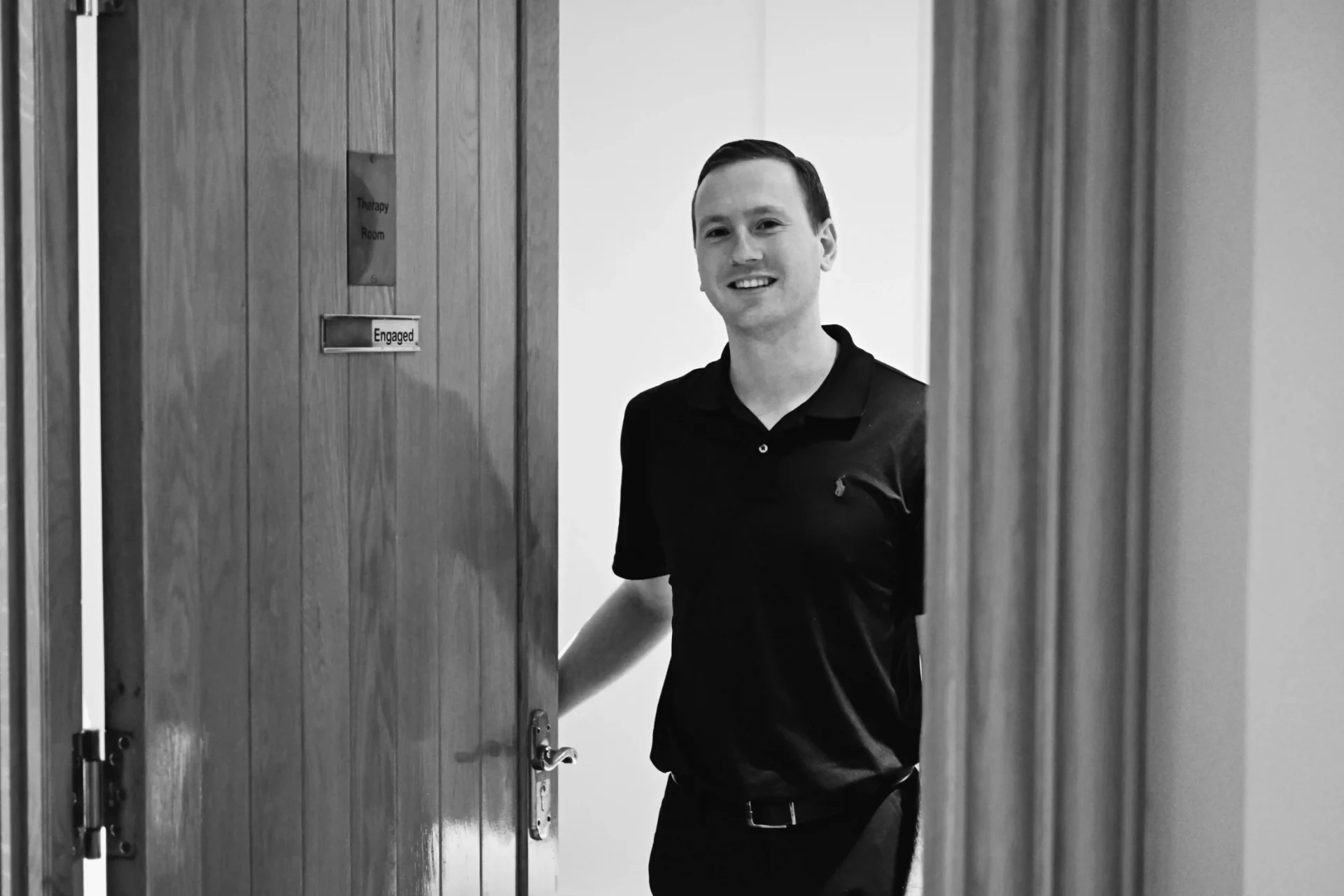
I was 12 years old when I found out what I wanted to do with my life.
I’d fractured my elbow playing rugby and ended up on a treatment table for the first time. I had no idea what osteopathy was, but something about that appointment clicked. I loved sport. I was fascinated by the body. I wanted to help people. It ticked every box.
That single experience set the direction for everything that followed: four years of training at Swansea University, over twelve years treating patients, and eventually building Body Beliefs; the practice I always knew I wanted to create.
This is the story behind it.
Before osteopathy: sport, curiosity, and a lucky break
Growing up, sport was a constant. Rugby, football, golf, swimming, I played them all. I was always interested in the body, in staying active, and in how physical health connects to mental and social wellbeing.
Before the fractured elbow pointed me towards osteopathy, the only other career I remember wanting was to be a lorry driver. I was about five, so I think that gets a pass.
The real turning point came a few years after my injury, when through my dad’s contacts I spent two weeks at the British School of Osteopathy in Borough, shadowing the clinic and the school. That was it. Decision made.
Training: what surprised me most
I trained at Swansea University for four years. It was one of the best periods of my life, personally and professionally.
A few things stood out during training:
- The breadth of knowledge required. To treat people safely, an osteopath needs to understand far more than bones and muscles; pharmacology, pathology, lifestyle, mental health, how all the body’s systems interact.
- How much communication matters. You can have excellent technique and still fail a patient if you can’t explain clearly what’s happening and why.
- The moment it all clicked. In my final six months I was treating patients in the university’s private practice, the NHS, and with a professional rugby team, all simultaneously. For the first time I didn’t feel like a student practising osteopathy. I felt like an osteopath.
What treating real patients taught me
When I started seeing patients, I loved it immediately. I still do. But like most practitioners early on, I dealt with impostor syndrome, that gap between what you know and what you wonder if you know.
The biggest lesson of my career hasn’t been a clinical technique. It’s been this: listen properly.
Not just to where someone says it hurts, but to everything around it. Their sleep. Their stress. Their history. Their life. And then reflect it back in plain language that helps someone understand their own body, rather than worrying them more.
That shift, from treating a problem to treating a person, changes everything about the quality of care you can give.
How I actually think about pain
Most people come to see an osteopath because something hurts, and they want to know what caused it. The honest answer is usually: several things, not one.
Pain is influenced by sleep, stress, hydration, previous injuries, emotional state, environment, all of it feeds in. I use a bonfire analogy:
- The logs: bigger, persistent drivers: old injuries, long-term poor sleep, chronic stress. They keep the fire burning.
- The kindling: day-to-day irritants: sitting too long, a hard workout, a bad posture day. They help the fire catch.
- The paper: emotional factors: anxiety, worry about the pain itself. They flare things up fast.
- The oxygen: your environment: workload, life pressure, lack of recovery. More oxygen, bigger fire.
- The match: the moment people blame: “I just bent over and my back went.” But the match only works because everything else was already there.
If we want to reduce pain, we don’t just avoid the match. We gradually remove the fuel, better sleep, stress management, regular movement, proper recovery time.
This is what osteopathic treatment actually looks like in practice. Not chasing the trigger, but understanding and addressing the conditions that allowed it to happen.
Why I started Body Beliefs
I always knew I wanted my own practice. I’d worked in other clinics, seen what worked, seen what didn’t and had a clear picture of what I wanted to build.
The model in my head was the old village GP. Friendly, accessible, professional. A place where:
- You’re never rushed or made to feel like an inconvenience
- You leave with a clear explanation and a practical plan
- You’re not put on an open-ended course of treatment with no end in sight
- You understand your own body better walking out than when you walked in
A good outcome, to me, isn’t just the absence of pain. It’s someone leaving feeling informed, reassured, and more confident about their health.
Starting out was exciting and terrifying in equal measure. The scariest moment wasn’t the business admin, it was day one. Opening the diary. Waiting for the phone to ring. That vulnerability doesn’t fully go away, but you learn to sit with it.
The person behind the practice
My nan always told me: do something for your body, something for your mind, and something for your soul, every day. For her that’s badminton and Zumba, Mahjong, and church.
I try to live by the same idea. Outside of the clinic I lift weights and run (not always out of enjoyment), play golf, spend time in the garden, and bake bread on weekends. I also drive a classic Austin Mini, which tells you either everything or nothing about me.
The reason I share this: everything I recommend to patients, I apply myself. Exercise, sleep, stress management, recovery. I’m not asking you to do anything I wouldn’t do.
One of my most inspiring patients is 97 years old. Every day he does press-ups, calf raises, lunges, glute bridges, walks, plays piano, paints, and stays connected with the people around him. Physical, mental, social, every single day. He’s a reminder that health isn’t something you have or don’t have. It’s something you do.
What to expect at Body Beliefs
Whether you’re coming in for osteopathy, sports massage, or you’re not sure yet which is right for you, here’s how every appointment works:
- We start by listening. A full conversation about where the problem is, how long it’s been there, what makes it better or worse, sleep, stress, activity levels. This shapes everything.
- We look at the whole picture. Osteopathy is holistic, a back pain issue might trace back to your hip. A shoulder problem might stem from how you’re breathing. We treat the whole person, not just the site of pain.
- You get practical advice from session one. Exercises, movement tips, lifestyle factors to address, things you can act on between sessions.
- You leave with clarity. Plain English explanation of what’s happening and what comes next. No jargon, no vague reassurance.
Before your first visit, the most important thing I want you to know is this: you don’t need to be fixed. Your body is capable of change. We’re here to guide that process.
Frequently asked questions
Do I need a GP referral? No. You can book directly without a referral. Osteopaths are regulated by the General Osteopathic Council and trained to assess and diagnose independently.
What conditions can you help with? We treat a wide range of issues, back and neck pain, sports injuries, sciatica, joint pain, headaches linked to neck and shoulder tension, and more. Not sure if we can help? Get in touch before you book and we’ll have an honest conversation about it.
How many sessions will I need? It depends on the nature and history of the problem. Some people improve significantly in one or two sessions. I’ll give you an honest estimate at your first appointment, not an open-ended plan.
What’s the difference between osteopathy and sports massage? Osteopathy takes a whole-body diagnostic approach, assessing structure, movement and the root cause of pain. Sports massage focuses on soft tissue, relieving muscle tightness, improving circulation and supporting recovery. Many patients benefit from both, and we often combine the two.
Does it hurt? Some discomfort during or after treatment can be normal, especially when the area being worked on is already sensitive. I’ll explain what I’m doing throughout, and you’re in control at every point.
Ready to book?
If you’ve been sitting on the idea of seeing an osteopath in Billericay, or you’ve been managing something that keeps coming back without ever fully resolving, come and have a proper conversation.
Book your first appointment at Body Beliefs – Initial consultation £80 / 60 minutes.
Rory Tyrrell is a registered, award-winning osteopath and founder of Body Beliefs, based in Billericay, Essex. He trained at Swansea University and has been in practice for over twelve years. Body Beliefs offers osteopathy, sports massage and medical acupuncture at two locations: Stock Brook Country Club and Oakdin Clinic.

