
Most sciatica gets better on its own. The NHS puts it at a few weeks to a few months, though for some people it does drag on longer than that. The part most people don’t realise is how much influence they have over which end of that range they land on, and that what helps is usually the opposite of what instinct tells you to do.
I get asked this question more than almost any other, usually by someone standing slightly sideways in the doorway, so I thought it was worth writing down properly.
First: sciatica isn’t really a diagnosis
This is the bit that changes how people think about their recovery, so it’s worth getting straight.
Sciatica is a description of where you feel pain, not a description of what’s causing it. It means pain travelling from the lower back, through the buttock and down the back of the leg, sometimes as far as the toes. It might be sharp and shooting, it might be numbness, it might be pins and needles. Usually it’s only down one leg.
But the sciatic nerve is being irritated by something, and that something is what determines how long you’re dealing with it. The most common culprit is a bulging disc in the lower back pressing on the nerve root, which is why I’ve written separately about what a slipped or bulging disc actually is, and why discs don’t in fact slip anywhere.
It can also come from irritation of the nerve root through muscle spasm or a locked facet joint, from tightness in the piriformis muscle deep in the buttock, or from narrowing of the space the nerve passes through. These behave differently and recover on different timelines.
So “how long does sciatica last” is a bit like asking how long a cough lasts. The honest answer starts with working out what’s causing it.
So what’s a realistic timeline?
Broadly, and with the caveat that I haven’t examined you:
- The first few days are often the worst, and can be genuinely miserable. This is not a sign of how the rest of it will go.
- Two to six weeks is where a lot of straightforward cases substantially improve, particularly when you’ve stayed active.
- Six weeks to a few months is still a normal, unremarkable recovery for a disc-related sciatica. Nerves are slow healers compared with muscle. They’re not damaged, they’re irritated, and irritation takes its time to settle.
- Beyond three months, we’d want to look properly at what’s keeping it going, because by that point it’s rarely just the original irritation.
One thing I’d say to anyone in week two feeling despondent: improvement in sciatica is almost never a straight line. You’ll have a good day, then a bad one, and assume you’ve undone everything. You almost certainly haven’t. Look at the trend across a fortnight, not across an afternoon.
What makes sciatica last longer than it needs to
Four things, and I see all four every week.
Resting up. The single most common mistake. It feels like the sensible, protective thing to do, and it is one of the few things reliably shown to make recovery slower. Prolonged rest lets muscles deconditon and joints stiffen, and it tends to make the pain feel more threatening rather than less.
Waiting for a scan before doing anything. Understandable, but it puts your recovery on hold for weeks. More on this below.
Sitting for long stretches. Sitting loads the lower back and, for a lot of disc-related sciatica, is the position that provokes it most. If your job is desk-based, the fix isn’t a heroic new chair, it’s getting up more often than you think is reasonable.
Fear of movement. This one is the quiet killer. Once you’re convinced that bending will do damage, you start moving like a person carrying something fragile, all day, for weeks. That guarding creates its own pain, on top of the original problem.
What actually speeds it up
Keep moving, within reason. Keep up your normal routine as far as you’re comfortable and confident doing it. A little discomfort while moving is normal when you’re in pain. Walking is excellent. So is swimming. You don’t need to be brave, you just need to keep going.
Heat, and sensible pain relief. Heat packs help a lot of people. Your pharmacist can advise on what’s appropriate for you to take.
Hands-on treatment combined with exercise. This is worth being precise about, because it’s how the evidence actually reads. NICE recommends manual therapy (spinal manipulation, mobilisation, or soft tissue work like massage) for low back pain with or without sciatica, but specifically as part of a treatment package that includes exercise. Not instead of it.
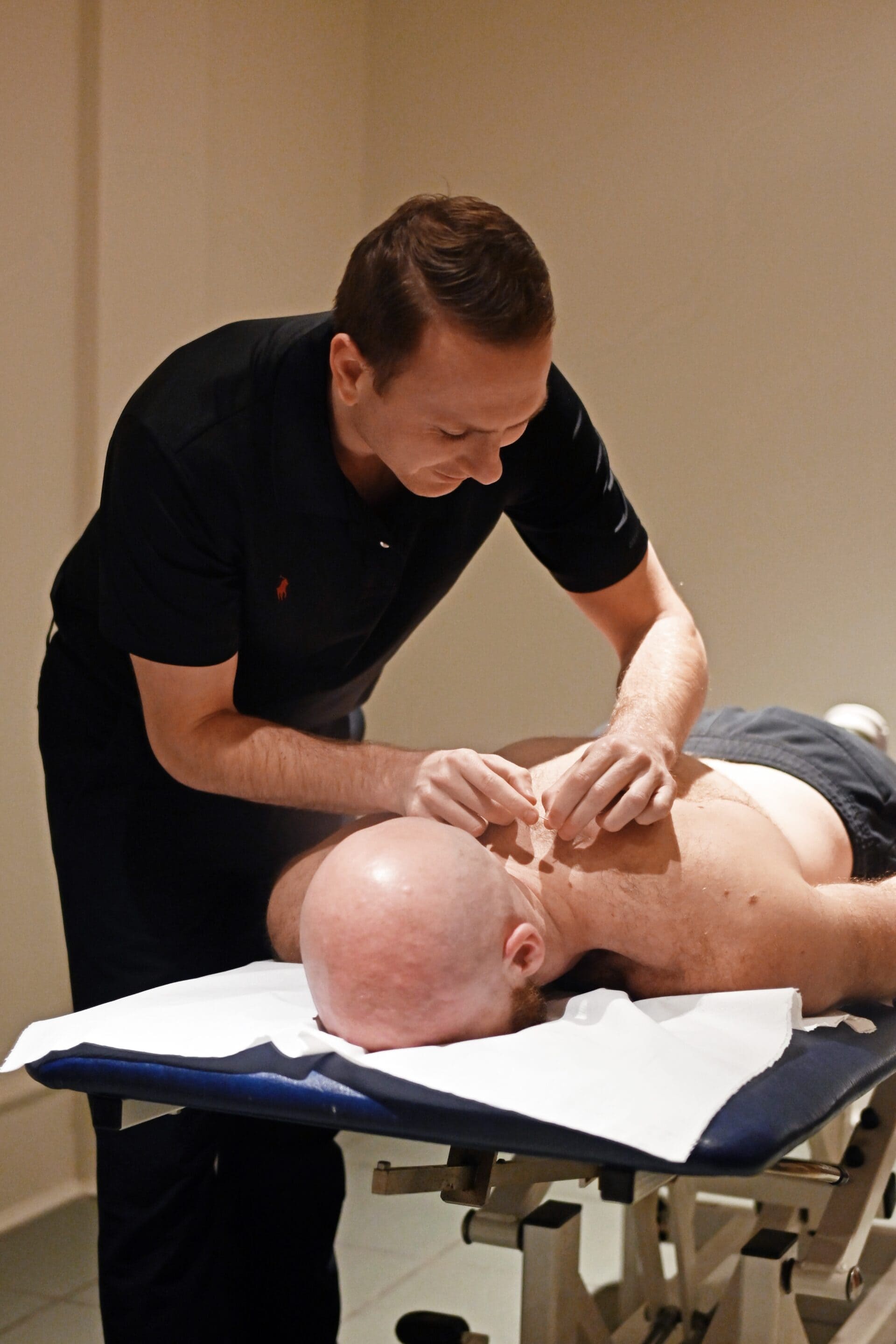
Which is exactly how I work. Hands-on treatment can ease the nerve irritation, release the muscle tension that’s built up around it and get you moving more freely, sooner. But the exercises you do between appointments are what make it stick. Anyone offering you hands-on treatment alone, indefinitely, isn’t following the evidence.
Understanding what’s going on. I’m aware this sounds like the soft option, but it isn’t. Pain isn’t a simple readout of tissue damage. It’s shaped by stress, sleep, past experience and what you believe is happening inside you. People who understand why their leg hurts consistently do better than people who are frightened of it. That’s one of the more useful things I can offer in an hour.
Do you need an MRI?
Usually, no. And this surprises people.
NICE advises against routinely offering imaging for low back pain with or without sciatica outside a specialist setting. Scans are considered in specialist care only when the result is likely to change what’s actually done about it.
The reason is that scans of the lower back find things in almost everybody. Disc bulges and degeneration show up in large numbers of people with no pain whatsoever, so a scan often can’t tell you which finding, if any, is the one causing your symptoms. And a report full of phrases like “degenerative change” can genuinely make people worse, because it sounds like damage when it’s usually just a description of a spine that has been in use for a few decades. I’ve written more about this in my piece on back pain myths.
A thorough hands-on examination, including proper orthopaedic and neurological testing, tells us most of what we need to know. And if there’s a reason you do need imaging, that examination is how we find it.
When sciatica needs urgent attention
Rarely, symptoms in this area point to something that needs treating the same day rather than next week. Please go straight to A&E or call 999 if you have:
- sciatica down both legs
- severe or worsening weakness or numbness in both legs
- numbness around your genitals or bottom, or a change in sensation when wiping
- difficulty passing urine, or loss of bladder control that isn’t normal for you
- loss of bowel control that isn’t normal for you
These are uncommon, and I’d rather you read them and dismiss them than not know. If any of them apply, don’t wait for an osteopathy appointment.
Short of that, if your pain isn’t improving after a week or two of doing the sensible things, is getting worse, or is stopping you doing what you need to do, that’s the point to have it looked at properly.
Having it assessed in Billericay
When someone comes in with sciatica, the first appointment runs a full hour, and most of that is working out what’s irritating the nerve: history, how it behaves through your day, and a full orthopaedic and neurological examination. Then I’ll explain what I’ve found in plain English, treat what can be treated on the day, and send you away with two or three things to do rather than a printout of twelve.
You can read more about how we treat sciatica and back pain, or book an appointment online. If nothing online suits, ring us on 01277 676 676. We often have availability that isn’t showing on the booking system.
Frequently asked questions
How long does sciatica last? Most sciatica improves over a few weeks to a few months, and the first few days are often the worst. Recovery is rarely a straight line, so judge it on the trend over a fortnight rather than day to day. Staying active is the single biggest thing within your control.
Is sciatica always caused by a slipped disc? No. A bulging disc pressing on the nerve root is the most common cause, but sciatic pain can also come from nerve root irritation through muscle spasm or a locked joint, from tightness in the piriformis muscle, or from narrowing of the space the nerve travels through. Each behaves differently, which is why an assessment is worth more than a guess.
Should I rest if I have sciatica? Avoid prolonged rest. Staying as active as you comfortably can is associated with faster recovery, while extended bed rest tends to prolong pain and stiffness. Keep to your normal routine as far as you’re confident doing so.
Can osteopathy help sciatica? Yes, as part of a package. NICE recommends manual therapy for low back pain with or without sciatica when it’s combined with exercise. Hands-on treatment can ease nerve irritation and muscle tension and restore movement; the exercises between sessions are what keep the improvement.
Do I need a scan for sciatica? Usually not. NICE advises against routine imaging outside specialist settings, because scan findings like disc bulges are common in people without any pain and often can’t identify the source of symptoms. A thorough clinical examination is the more useful starting point, and will flag if imaging is genuinely needed.
When is sciatica an emergency? Go to A&E or call 999 if you have sciatica in both legs, worsening weakness or numbness in both legs, numbness around your genitals or bottom, or any new loss of bladder or bowel control. These are rare but need same-day assessment.

